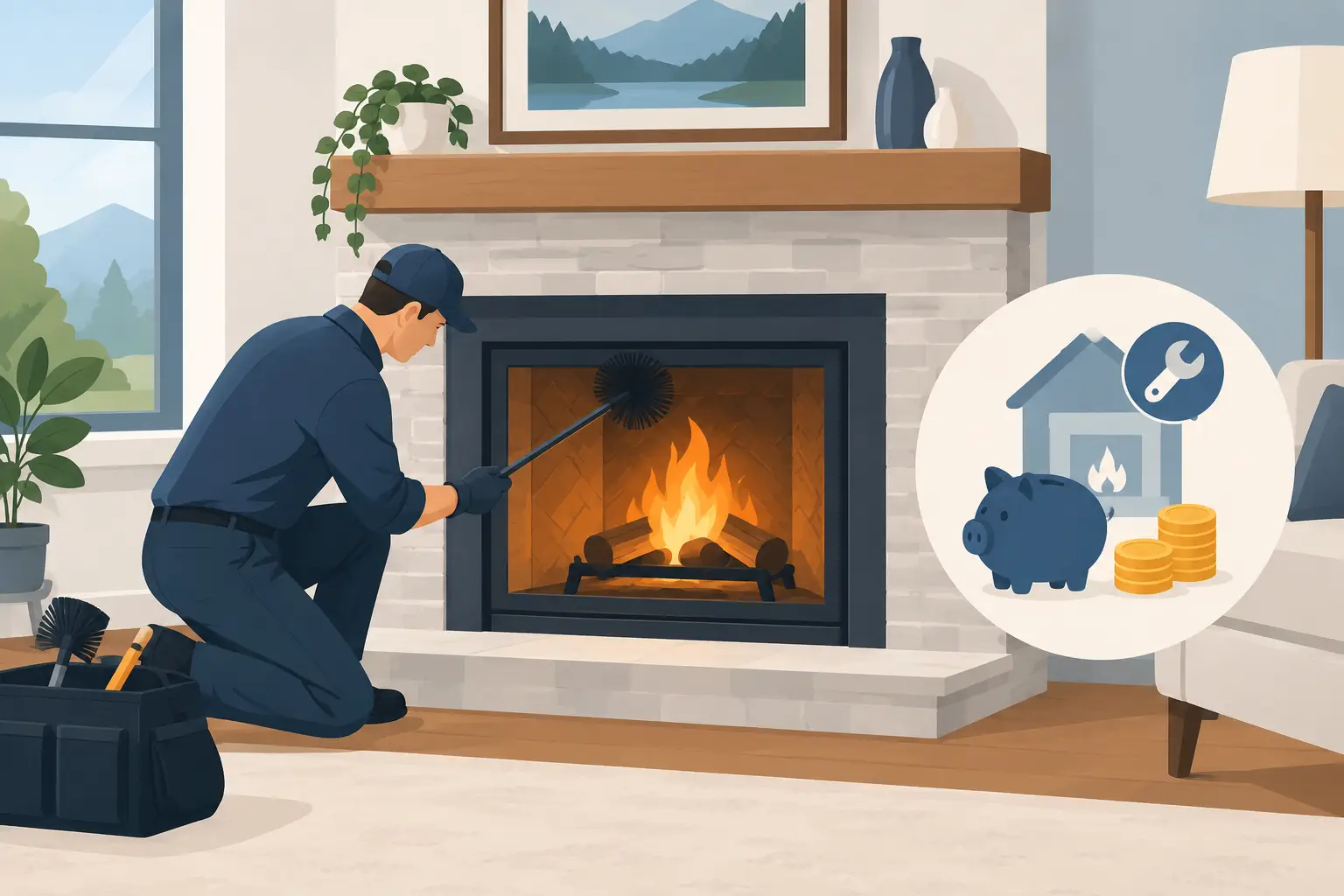
A fireplace that lights on the first cold evening of the year can make maintenance easy to forget. But fireplace maintenance cost is usually far easier to manage than an emergency repair after the unit will not start, produces an unusual odor, or shows signs of unsafe operation. For Treasure Valley homeowners, the best approach is simple: budget for regular service, address small issues early, and get a clear quote before work begins.
The final price depends on the type of fireplace, its condition, how long it has been since the last service, and whether a repair is found during the inspection. A basic annual visit is typically the most affordable part of ownership. Neglect is what turns routine care into a larger bill.
What Is Included in Fireplace Maintenance Cost?
Professional fireplace maintenance is more than wiping down the glass. A qualified technician checks the parts that affect safe ignition, proper venting, reliable heat, and clean operation. The exact checklist changes between gas, wood-burning, pellet, and electric fireplaces, but a service visit should focus on the system as a whole.
For a gas fireplace, maintenance commonly includes inspecting the burner and pilot assembly, checking the ignition system, cleaning the glass and firebox, inspecting the venting, and verifying that safety controls operate correctly. The technician may also look for loose wiring, corrosion, damaged gaskets, or signs that the unit is not burning fuel properly.
Wood-burning fireplaces need a different level of attention. The firebox, damper, chimney connection, hearth, and flue all matter. Creosote buildup, nesting material, moisture damage, cracked refractory panels, and failing chimney components can affect both performance and safety. If the fireplace sees frequent use, cleaning needs may be more involved.
Electric fireplaces generally cost less to maintain because there is no combustion or venting system. Still, dust, blocked airflow, worn switches, blower issues, and damaged heating elements can keep an electric unit from delivering the heat and appearance you expect.
Typical Fireplace Maintenance Costs in the Treasure Valley
A routine gas fireplace inspection and cleaning often falls in the range of about $150 to $300, depending on the fireplace model, accessibility, and condition. A unit that has been serviced consistently is usually faster to inspect and clean than one that has sat unused for several seasons.
Wood-burning fireplace and chimney service can vary more widely. A basic inspection may be comparable to a gas fireplace visit, while chimney sweeping, heavy creosote removal, difficult roof access, or repairs to the flue can raise the total. Homeowners should ask whether chimney cleaning is included in the quoted work or priced separately.
For electric fireplaces, a diagnostic or maintenance visit may be less expensive when the issue is limited to cleaning, an adjustment, or a simple control problem. Costs rise when the blower motor, heating element, remote receiver, or control board needs replacement.
These are working ranges, not a substitute for an on-site estimate. Fireplace design, age, fuel type, and the availability of replacement parts all affect the actual price. Older gas fireplaces are a common example. A service call may be straightforward, but an obsolete valve or control module can be harder and more expensive to source.
Maintenance Versus Repair
Maintenance is planned care intended to prevent trouble. Repair is the work needed when something has already failed or is no longer operating safely. That distinction matters when comparing prices.
A routine appointment may reveal a worn thermocouple, dirty pilot assembly, failing switch, cracked gasket, or weak blower. Replacing one of those parts adds to the maintenance visit, but handling it early can prevent a no-heat call later in the season. In many cases, the labor savings from completing a minor repair during scheduled service are better than paying for a separate visit during cold weather.
If a fireplace has not been used in years, expect the first appointment to take longer. The technician may need to clean more thoroughly, test components that have sat idle, and determine whether prior repairs or installation work meet the manufacturer’s requirements. That first service is still worthwhile because it establishes a clear baseline for future maintenance.
What Makes a Fireplace Service Bill Go Up?
No homeowner wants a vague invoice. The main cost drivers are usually easy to understand once the fireplace is inspected.
The condition of the unit is the first factor. Soot, dust, pet hair, rust, insect debris, and neglected glass can add cleaning time. In gas units, a dirty burner or pilot can lead to delayed ignition or uneven flames. In wood-burning systems, creosote and flue obstructions require careful attention.
Access is another factor. A fireplace installed in a tight built-in, a high chimney, or a difficult-to-reach area may take longer to service safely. Venting that runs through multiple levels of the home can also require a more detailed inspection.
Parts are the third major variable. Common replacement parts may be available at a reasonable price, while older or specialty fireplace components can cost more. Before approving repairs, ask what has failed, whether the part is necessary for safe operation, and whether the repair is a sensible investment for the age of the unit.
Finally, timing affects cost. Calling for annual maintenance before the first extended cold spell gives you more scheduling flexibility. Waiting until the fireplace quits during peak heating season can mean a repair appointment is needed instead of a simple tune-up.
When Should You Schedule Fireplace Maintenance?
For most gas fireplaces, annual service is a practical standard, especially if the unit is used regularly through fall and winter. Late summer and early fall are often good times to schedule because the fireplace can be inspected before you depend on it for supplemental heat.
Wood-burning fireplaces should be inspected regularly and cleaned as needed based on use, fuel quality, and visible buildup. Burning wet or poorly seasoned wood creates more creosote, which can increase cleaning needs. If you use the fireplace heavily, do not assume one annual check covers every situation.
Do not wait for the annual appointment if you notice delayed ignition, unusual smells that do not fade after initial use, soot around the glass, weak flames, a blower that will not run, smoke entering the room, or a carbon monoxide alarm. Turn the unit off when appropriate and have the issue evaluated before using it again.
How to Keep Costs Predictable Between Service Visits
Homeowners can do a few simple things without taking on work that should be left to a technician. Keep the area around the fireplace clear, avoid blocking vents, and follow the manufacturer’s instructions for normal operation. For gas fireplaces, do not use abrasive cleaners on specialty glass or attempt to adjust gas components yourself.
Pay attention to changes in performance. A flame pattern that looks different, an ignition that clicks repeatedly, or a fan that becomes noisy can be an early warning. Calling while the fireplace still operates may give you more options than waiting for a complete failure.
It also helps to keep records of prior service and repairs. Knowing when a pilot assembly, blower, gas valve, or control component was replaced helps a technician diagnose recurring problems and helps you make a better decision if replacement becomes more cost-effective than another repair.
Get Straight Answers Before Authorizing Work
A dependable contractor should explain what the maintenance visit includes and separate routine service from recommended repairs. You should know whether the fireplace is safe to operate, what problem was found, and what the price covers before the work moves forward.
Near Me Heating and Air provides fireplace maintenance, repair, and replacement for homeowners across the Treasure Valley and nearby eastern Oregon communities. As a veteran-owned local contractor, the focus is on practical service, quality workmanship, and clear communication – whether your fireplace needs a seasonal check or attention before the next cold night.
A scheduled fireplace visit is not just another household chore. It is a chance to keep a working heat source dependable, protect the comfort of your home, and catch manageable problems before they become expensive surprises.
Leave a Reply