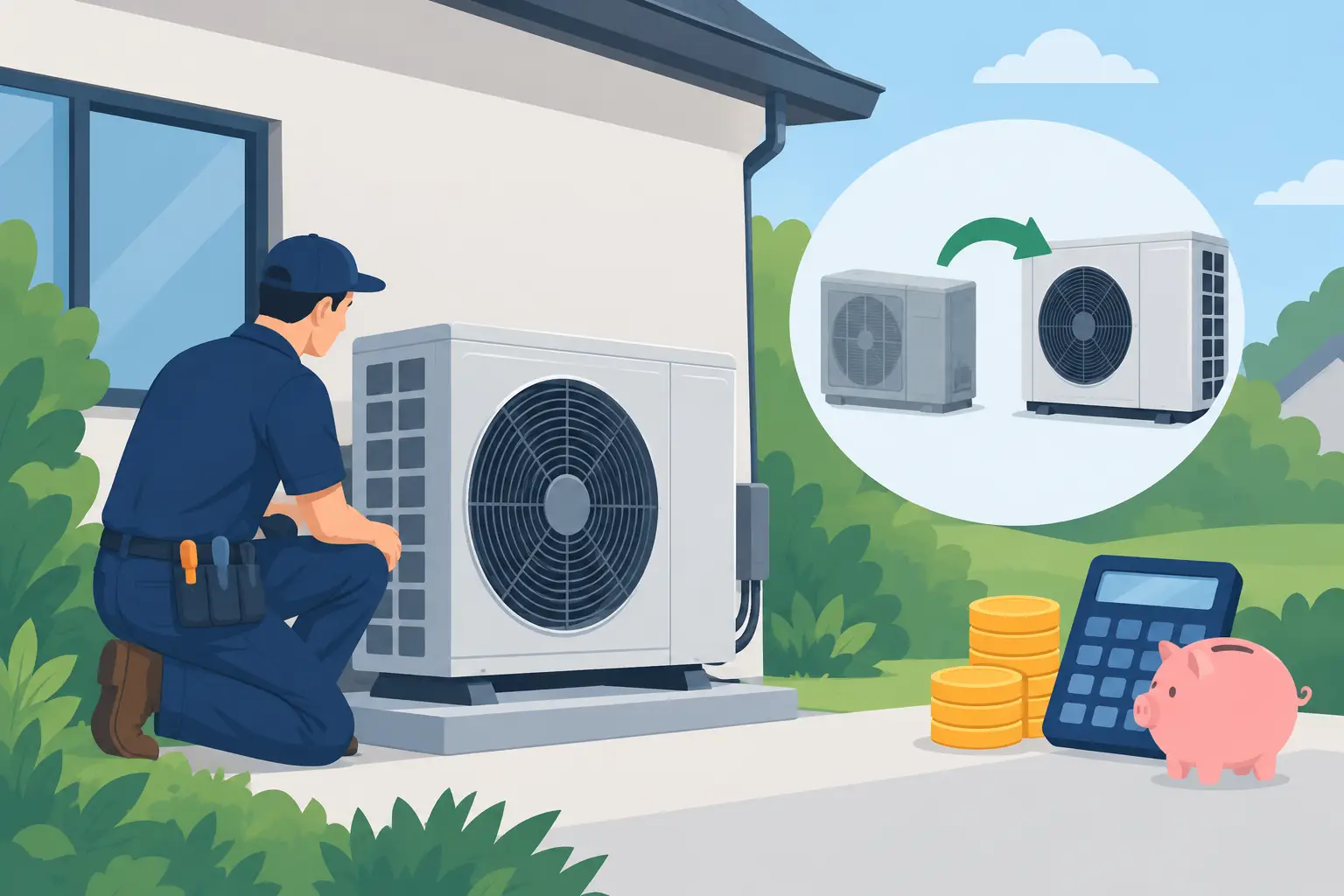
A heat pump that quits during an Idaho cold snap is not a problem most homeowners can put off. Heat pump replacement cost depends on more than the equipment sitting outside your home. The right price reflects a system that is properly sized, installed correctly, and ready to handle both Treasure Valley summer heat and winter temperatures.
A low equipment price can look appealing until the installation leaves you with uneven rooms, high utility bills, or a system that runs constantly. A clear replacement estimate should account for the home, the existing equipment, and the work needed to make the new system perform as it should.
Typical Heat Pump Replacement Cost Factors
For most homes, replacing a heat pump is a significant home investment. Pricing can vary widely because homes, equipment options, and installation conditions are different. A straightforward replacement using existing compatible ductwork, electrical service, and refrigerant lines will generally cost less than a project that requires upgrades in one or more of those areas.
The biggest factor is system size. Heat pumps are measured in tons or BTUs, but bigger is not automatically better. An oversized unit can cycle on and off too often, which can reduce comfort and put unnecessary wear on components. An undersized system may struggle in extreme weather. A contractor should evaluate your home rather than simply replacing the old unit with the same size.
Efficiency also affects upfront cost. Higher-efficiency heat pumps usually cost more to purchase, but they can reduce electricity use over time. The best fit depends on how long you plan to stay in the home, your existing utility costs, and whether comfort features such as variable-speed operation matter to your household.
Equipment type matters as well. A standard ducted heat pump replacement is different from installing a ductless mini-split system. Cold-climate equipment, dual-fuel setups that work with an existing furnace, and variable-capacity systems each have different price points and installation requirements.
What a Complete Heat Pump Replacement Should Include
When comparing estimates, do not compare the equipment model alone. Ask what work is included. A complete replacement commonly involves removing the old indoor and outdoor equipment, setting the new units, connecting refrigerant lines, completing electrical connections, testing operation, and hauling away old materials.
There may also be necessary work that is easy to overlook. A new pad for the outdoor unit, a line-set replacement, thermostat upgrades, condensate drainage, and permits can all affect the final number. If the existing electrical panel or breaker cannot safely support the new equipment, electrical work may be needed before installation can move forward.
Ductwork deserves a close look. Leaky, poorly sized, or damaged ducts can waste the performance you paid for in a new heat pump. In some homes, minor sealing or repairs are enough. In others, major duct modifications may be needed to provide proper airflow. That is not an add-on for its own sake. Airflow is a core part of heating and cooling performance.
If you are replacing a heat pump that uses older refrigerant, the condition and compatibility of the existing refrigerant lines should be evaluated. Reusing lines without proper inspection and preparation can create problems for new equipment. A qualified installer will explain whether the lines can be used, need cleaning, or should be replaced.
Why installation quality affects long-term cost
The purchase price is only one part of ownership cost. A heat pump needs correct refrigerant charge, airflow, electrical protection, and controls to operate efficiently. Small installation shortcuts can lead to poor comfort, frequent service calls, and a shorter equipment life.
That is why the lowest bid is not always the lowest cost. A detailed estimate from a local contractor gives you a better basis for comparison than a one-line price. It should identify the equipment being installed, the work included, warranty information, and any conditions that could change the scope.
Choosing the Right System for a Treasure Valley Home
Homes in Boise, Meridian, Nampa, Caldwell, Payette, Ontario, and nearby communities face real seasonal swings. Your system needs to cool effectively in summer while providing dependable heat when temperatures drop. The right replacement may be a heat pump by itself, or it may be a dual-fuel system paired with a furnace for additional cold-weather support.
A dual-fuel setup can make sense for homeowners who already have a natural gas furnace in good condition. The heat pump handles much of the heating season efficiently, while the furnace can take over when temperatures reach a point where gas heat is the more practical choice. Whether that approach is worthwhile depends on your existing equipment, fuel costs, and comfort preferences.
Variable-speed heat pumps are another option. They can adjust output more gradually than single-stage equipment, often improving temperature consistency and humidity control. They cost more upfront, so they are not automatically the right choice for every property. For a home with persistent hot or cold spots, long-term occupancy plans, or a strong focus on comfort, they can be worth discussing.
Do not choose based on efficiency ratings alone. High ratings are useful, but a well-installed mid-efficiency system can be a better investment than premium equipment installed without proper design and commissioning. The goal is reliable comfort at a fair price, not the most expensive label on the estimate.
How to Plan for Heat Pump Replacement Cost
Start with the condition of your current system. If a repair is minor and the equipment is not near the end of its service life, repair may be the sensible choice. Replacement becomes more practical when repairs are recurring, major components have failed, utility bills are rising, or the system no longer keeps the home comfortable.
Before approving a replacement, ask for a home-specific recommendation. The contractor should consider square footage, insulation, window exposure, duct condition, number of occupants, and the performance of your current equipment. If certain rooms have always been uncomfortable, mention that before the system is selected. Replacement is the best time to address problems that a simple repair cannot solve.
You should also ask about available manufacturer offers, utility programs, and tax incentives. These can change, and eligibility often depends on the equipment selected and the details of the installation. Treat incentives as a possible benefit, not the only reason to choose a system. A reliable, properly sized installation remains the priority.
For landlords and property managers, timing matters. Replacing equipment before a total failure can reduce disruption for tenants and give you time to compare options without making a rushed decision. For homeowners, planning ahead may allow installation during a milder stretch of weather instead of an emergency call during peak heating or cooling demand.
Questions to Ask Before You Approve an Estimate
A good conversation can prevent expensive misunderstandings. Ask whether the proposed heat pump is sized for your home, what electrical or ductwork work is included, and whether the thermostat will be compatible. Confirm who handles permits when required and how the system will be tested after installation.
It is also reasonable to ask about labor and equipment warranties, expected maintenance needs, and what happens if an issue appears after startup. Clear answers are a sign that the contractor stands behind the work. Vague pricing or pressure to decide immediately should give you pause.
Near Me Heating and Air provides practical replacement recommendations for homeowners who want dependable comfort without unnecessary upselling. As a veteran-owned local contractor, the focus is on quality workmanship, competitive pricing, and equipment that fits the home.
A heat pump replacement should leave you with more than new equipment. It should give your household a clear plan for dependable heating and cooling. Get the system evaluated before the next breakdown forces a rushed decision, and make sure the estimate explains exactly what your home needs.
Leave a Reply