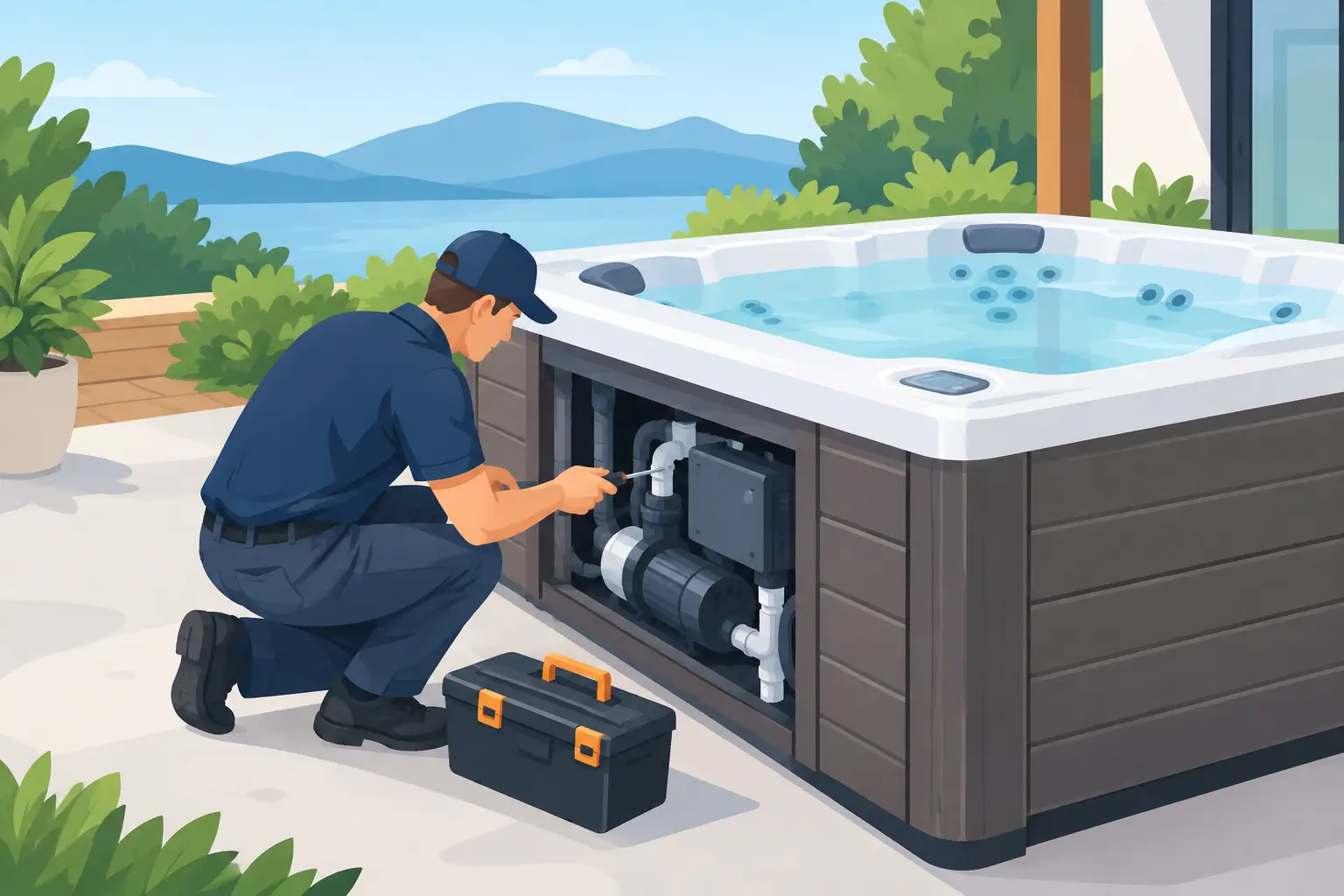
A hot tub is supposed to be the place you warm up after a cold Treasure Valley evening, not another piece of equipment demanding attention. When the water will not heat, a breaker keeps tripping, or a puddle forms beneath the cabinet, a qualified hot tub repair service can protect both your comfort and the equipment that makes it possible.
Some problems are minor and can be corrected with routine care. Others involve electricity, pressurized plumbing, heating components, or control systems that should be diagnosed by a professional. Knowing the difference helps homeowners avoid unnecessary damage, unsafe DIY repairs, and a small problem turning into a more expensive one.
Signs You Need a Hot Tub Repair Service
Hot tubs give warning signs before they stop working completely. Paying attention early can often reduce downtime and keep repair costs more manageable.
The water will not heat or does not hold temperature
If your spa is running but the water stays cold, the cause may be as simple as an incorrect temperature setting or a dirty filter restricting water flow. Start by checking that the cover is secure, the filters are clean, and the breaker has not tripped.
If those basics look right and the water still will not heat, the issue may involve the heater element, circulation pump, pressure switch, high-limit sensor, or control board. These parts work together, so replacing one part based on a guess can waste money. A technician can test the system, find the actual point of failure, and make the right repair.
In Idaho winters, delaying a no-heat issue can carry extra risk. Water lines and equipment can be damaged if a spa is left exposed to freezing conditions without proper operation or winterization.
The breaker trips or the control panel goes dark
A hot tub that repeatedly trips its GFCI breaker needs attention. Do not keep resetting the breaker to see if the problem goes away. A tripping GFCI can indicate moisture in a component, a failing heater, a pump problem, damaged wiring, or another electrical fault.
Likewise, a blank or erratic control panel can point to more than a bad display. It may be a communication issue between the panel and the control pack, a power supply concern, or a failed board. Electrical troubleshooting should be handled with the power disconnected and by someone who understands spa equipment.
You see water around the spa or inside the cabinet
Not every wet spot is a major leak. Splash-out, rainwater, and condensation can collect around a hot tub. But water that returns after the area is dried, a steadily dropping water level, or damp insulation inside the cabinet deserves a closer look.
Leaks commonly develop around pump unions, fittings, valves, heater connections, jet bodies, and plumbing lines. Some are accessible and straightforward to repair. Others may be hidden behind foam insulation or under the shell. Continuing to operate a leaking hot tub can damage pumps, create electrical concerns, and waste treated water.
Jets have weak pressure or stop working
Weak jets can come from a clogged filter, low water level, an air control setting, or a closed valve. Those are reasonable items for an owner to check. If the pump hums without moving water, makes grinding noises, or the problem remains after cleaning the filters, it is time for professional diagnosis.
A circulation or jet pump may have a blockage, failing capacitor, worn bearings, impeller damage, or an electrical issue. Running a pump dry or forcing it to run while it is struggling can turn a repairable problem into a pump replacement.
What Happens During a Professional Hot Tub Repair Visit
A proper repair starts with diagnosis, not a quick part swap. The technician should look at the symptoms, inspect the equipment area, verify water flow, check electrical operation, and test the components connected to the complaint.
For example, cloudy water and a heater error may be caused by poor water balance, a dirty filter, inadequate circulation, or a failed sensor. The error code alone does not always identify the bad part. The same is true for a leak. Water may travel along plumbing or insulation before it becomes visible, so the location of the puddle is not always the location of the leak.
Once the cause is identified, the next step is a clear repair recommendation. That should include what has failed, whether related parts show wear, and whether repair makes financial sense for the age and condition of the tub. A dependable contractor should explain the work in plain terms, not pressure you into replacing equipment that can be repaired.
Repair or Replacement: How to Make the Call
Most hot tub issues do not mean the entire spa needs to be replaced. Pumps, heaters, sensors, control panels, plumbing fittings, covers, and many electrical components can often be repaired or replaced individually.
Replacement becomes worth considering when the spa has repeated failures, major shell damage, extensive plumbing leaks, unavailable parts, or a control system that is costly to restore. It also depends on how the tub has been maintained. A well-kept older spa may justify a targeted repair, while a neglected unit with several failing systems may not.
Ask practical questions before approving major work. Is this the only failed component, or are several critical parts near the end of their service life? Are replacement parts readily available? What is the expected benefit of the repair? Is the tub structurally sound? A good answer considers your budget, how often you use the spa, and whether you plan to stay in the home long term.
Small Maintenance Steps That Prevent Bigger Problems
Regular maintenance cannot prevent every failure, but it reduces strain on the system. Clean filters on schedule, maintain the correct water level, and keep water chemistry within the manufacturer’s recommended range. Poor water balance can damage heaters, seals, and other internal components over time.
Pay attention to changes in sound and performance. A pump that becomes louder, a heater that takes longer to recover, or a control panel that starts showing intermittent errors is worth addressing before the spa stops completely.
The cover matters, too. A waterlogged or damaged cover lets heat escape and makes the heater work harder, especially during cold weather. It can also allow debris into the water and add unnecessary energy cost. If you plan to shut the hot tub down for the season, proper winterization is far safer than simply turning off the power and walking away. Remaining water in plumbing lines can freeze and cause expensive damage.
Local Help for Treasure Valley Homeowners
For homeowners in Boise, Meridian, Nampa, Caldwell, Payette, Ontario, Vale, and surrounding communities, hot tub problems do not always happen at a convenient time. A heater failure before a cold stretch or a leak discovered on a weekend can quickly move from frustrating to urgent.
Near Me Heating and Air provides local home-comfort service with the same practical approach homeowners expect for heating, cooling, fireplaces, and hot tubs. As a veteran-owned contractor, the focus is straightforward: identify the problem, explain the options, and complete quality work at a competitive price.
Before scheduling service, make a note of the spa brand and model, any error codes on the display, when the issue began, and whether the breaker has tripped. Those details can help speed up the diagnostic process. If you suspect an electrical fault, smell burning, see active leaking near electrical equipment, or notice a breaker repeatedly tripping, turn off power to the spa and call for service.
A hot tub should be a reliable part of your home, not a source of uncertainty. Addressing unusual sounds, water loss, heating trouble, and electrical problems early gives you the best chance of protecting the equipment and getting back to using it when you want to.
Leave a Reply